The Power of the Unspoken Word
The Tyranny of the "Last Word"
We live in the era of the "clapback." In our digital town square—X, Instagram, TikTok—the greatest sin is to be silenced, and the greatest perceived victory is to have the last word. We are conditioned to believe that if you don’t defend your reputation instantly, if you don’t "call out" your enemies with a sharp-tongued retort, you have lost. Influence is measured by the volume of your voice and the speed of your rebuttal. We are a culture addicted to self-justification. We spend our days crafting the perfect image, the perfect response, and the perfect defense to ensure that no one misinterprets us, no one mocks us, and no one gets the upper hand.
This social performance is exhausting. It requires us to be our own PR agents, constantly spinning our failures and amplifying our virtues. We live in fear that a single moment of silence in the face of an accusation will be interpreted as a confession of guilt or a sign of weakness. We have forgotten the dignity of quietude. We have lost the ability to let our character speak louder than our keyboards.
But today, on this Friday we dare to call "Good," we stand before a scene that contradicts every instinct of our modern age. We look at a King who has every right to speak, every power to condemn, and every reason to defend himself—and yet, he remains largely silent. In a world of noise, the silence of Jesus Christ is the most disruptive sound in history. While the world demands a shouting match, Jesus offers a sacrifice. While we scramble for control, he stretches out his arms and lets go.
The Sovereignty of the Lamb
As we navigate the readings from Isaiah, Hebrews, and the Gospel of John, we see three distinct movements that explain why this silence is not a sign of weakness, but the ultimate expression of divine power.
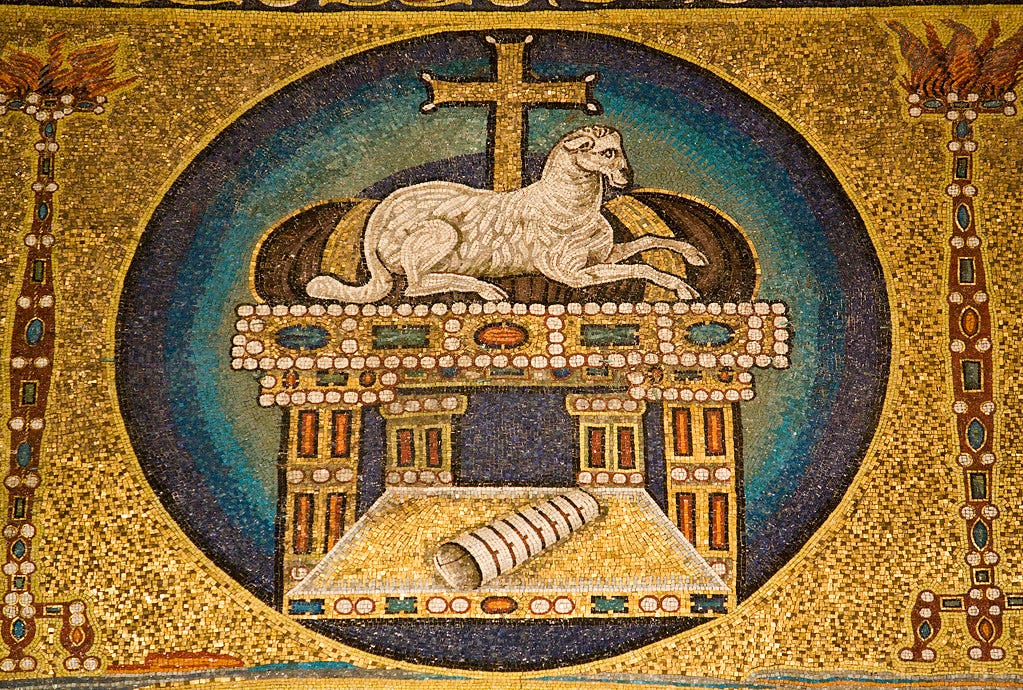
1. The Silent Exchange (Isaiah 52:13—53:12) Seven hundred years before the Roman nails were forged, the prophet Isaiah gave us the blueprint for this moment. He describes a Servant who was "pierced for our transgressions" and "crushed for our iniquities." But the most haunting line is this: "He was oppressed and afflicted, yet he did not open his mouth; he was led like a lamb to the slaughter, and as a sheep before its shearers is silent, so he did not open his mouth."
To understand this silence, we must understand the gravity of what was being carried. In the ancient sacrificial system, the lamb didn't argue. The lamb didn't plead its innocence or file a legal appeal. It simply bore the weight of the moment. Isaiah makes it clear that this "Man of Sorrows" was not just a victim of Roman politics or Jewish jealousy; he was the bearer of a cosmic burden. The text says, "the punishment that brought us peace was on him."
If Jesus had spoken to defend himself, he might have saved his life, but he would not have saved ours. His silence is the sound of a debt being paid in full. He allows the accusations of the world to wash over him like a flood, absorbing the poison of our "last words" so that he can give us a new word: Mercy. He was "assigned a grave with the wicked," not because he belonged there, but because we did. By remaining silent, he accepted our identity so that we might inherit his.
2. The High Priest of Our Tears (Hebrews 4:14-16; 5:7-9) The author of Hebrews pivots from the external suffering of the Servant to the internal heart of the Priest. We are told that Jesus offered up "prayers and petitions with fervent cries and tears." This is the "behind-the-scenes" of the Passion. While Jesus was silent before Pilate, he was crying out to the Father in the garden and on the wood.
This tells us something vital about the God we serve: He is not a stoic statue. He is a "Great High Priest" who is able to "empathize with our weaknesses." Because Jesus felt the sting of betrayal, the physical agony of the lash, and the psychological weight of being misunderstood, he has "been tested in every way, just as we are—yet he did not sin."
In his humanity, he learned "obedience from what he suffered." This does not mean he was disobedient before, but that he walked the full path of human limitation. He didn't just come to fix us; he came to be with us. Because he suffered, the throne of God is no longer a seat of distant judgment; it is a "throne of grace." When we feel silenced by our own suffering, or when we feel like the world is shouting us down, we do not pray to a distant deity. We pray to a God who has salt-water in his eyes and blood on his brow. The Cross is the bridge that turns our greatest fears into our greatest access to the Divine.
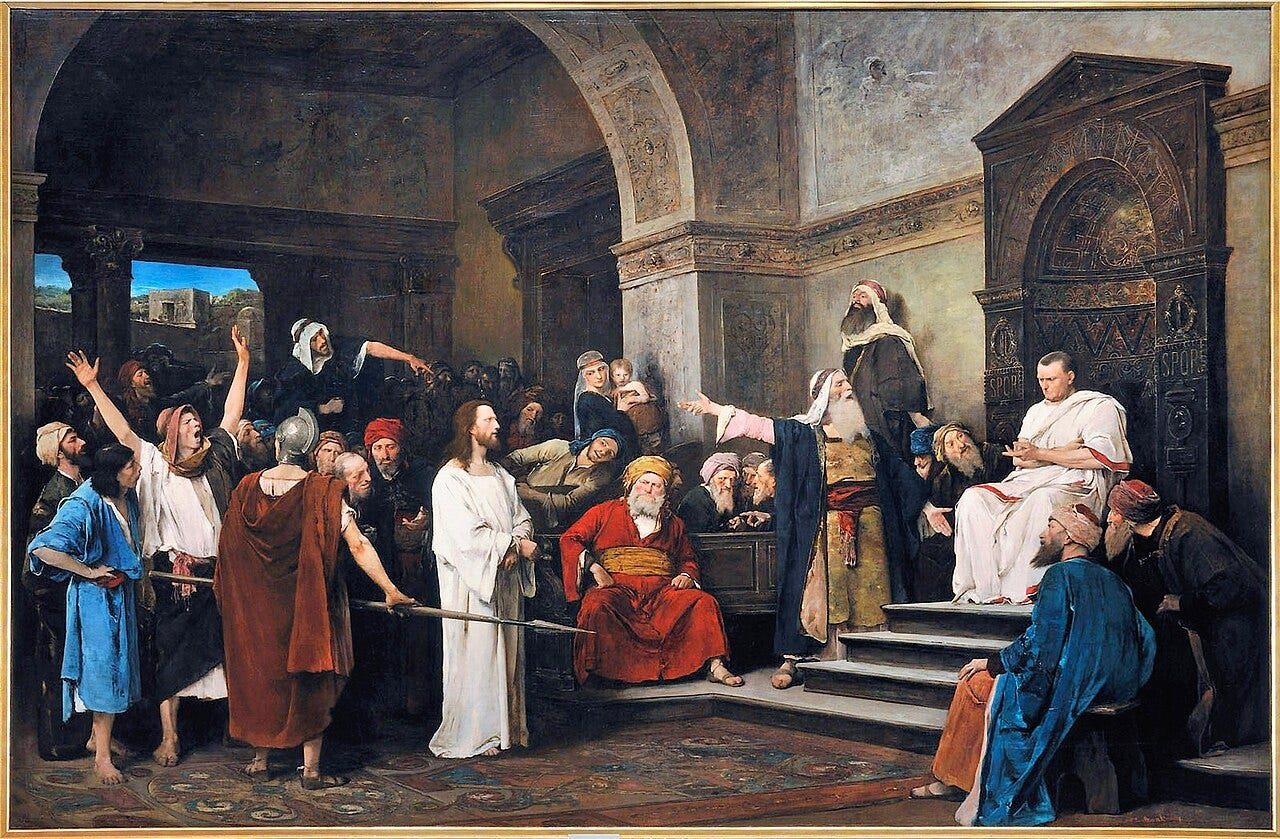
3. The Coronation of the King (John 18:1—19:42) In John’s Gospel, the Passion is not a tragedy; it is a coronation. Throughout the lengthy trial, notice the irony: Pilate is the one with the Roman legions, the marble halls, and the power of life and death, yet he is the one pacing nervously. Pilate is the one asking frantic questions: "Where are you from?" "Will you not speak to me?" "What is truth?" Jesus, bound and bleeding, is the only person in the room who is truly free. When he does speak, he doesn't speak to save himself; he speaks to testify to the Truth. He tells Pilate, "You would have no power over me if it were not given to you from above." This is a staggering claim. It means the nails didn't hold him there; his will did. The soldiers didn't take his life; he laid it down.
In John’s vision, the Cross is Jesus’s throne. The purple robe and the crown of thorns were intended as mockery, but they were accidentally accurate. He is the King. Even the sign above his head, "Jesus of Nazareth, King of the Jews," written in three languages, serves as a global proclamation of his reign. At the very end, he does not whisper a plea for help. He lets out a victory cry: "It is finished." In Greek, this is one word: Tetelestai. It was a business term meaning "Paid in full." It was a priestly term meaning "The sacrifice is perfect." Jesus had the last word after all, but it wasn't a "clapback" against his enemies. It was a declaration of completion for his friends.
Living in the Silence
What do we do with a day like today? How do we respond to the "Man of Sorrows" who died so that we might live? The world will tell you to move on, to get back to the noise, to keep defending your brand and your ego. But the Cross calls us to a different way of being.
First, stop trying to save yourself. Many of us are exhausted by the "religion" of self-improvement and the "law" of social media approval. We are tired of trying to be "good enough," tired of trying to prove our worth to people who don't care, and tired of carrying the guilt of our past. Look at the Cross. Jesus said, "It is finished." He didn't say, "I've done my part, now you do yours." He didn't say, "Here is a template, now go earn your salvation." He paid the debt. Your worth is not found in your "last word" or your latest achievement; it is found in the fact that the King of the Universe thought you were worth dying for while you were still his enemy.
Second, approach the Throne of Grace. Hebrews tells us to "approach God’s throne of grace with confidence." Some of you feel you cannot pray because you are too broken, too messy, or too sinful. You feel like you need to "fix" your life before you can talk to God. But look at the High Priest. He was "marred beyond human semblance" so that your marring wouldn't keep you from God. He was rejected so that you could be accepted. Don't clean yourself up to come to the Cross; let the Cross clean you. Bring your "loud cries and tears" to the one who has already felt them.
Third, embrace the "Weakness" of Love. The world sees the Cross as failure. We see it as the ultimate power. This week, I challenge you: where can you choose silence instead of a stinging retort? Where can you choose to serve someone who has wronged you, instead of "calling them out"? To follow the Crucified Christ is to believe that love is stronger than hate, and that losing your life for the sake of others is the only way to truly find it.
We are called to be Cyrenians—to pick up the cross for others. Look for the "Man of Sorrows" in your own neighborhood—the lonely, the grieving, the misunderstood—and stand with them. Show them a love that doesn't need to shout to be heard.
Today, the King is silent. The tomb is waiting. The world is dark. But we do not fear the darkness, for we know that the light of the world is simply resting, having finished the work of our salvation. Let us sit in that silence, not with fear, but with the quiet confidence of those who know that Sunday is coming—but only because Friday was so "Good."

