Showing posts with label St. Helena. Show all posts

Saturday, July 21, 2018

16th Sunday OT @ St. Helena

HOMILY - SIXTEENTH SUNDAY IN ORDINARY TIME
JULY 21 / 22, 2018
5:00 PM (SAT), 8:00 AM (ST. HELENA) ORDINARY FORM (ENGLISH) MASSES


Rear Admiral Alan B. Shepherd was the first American in space, and the fifth man to set foot on the moon. Not only the fifth man on the moon, but also the oldest, and the earliest born.

He was born in 1923, in Derry, New Hampshire; and died in Pebble Beach in 1998 – at the age of 74.
He served in the US Navy during World War II, and was one of the first astronauts, being chosen as one of the Mercury 7 in 1959.

His first space flight was May 5, 1961. The one obvious malfunction was that there was no provision for … well … using the bathroom. Nature called during the flight, and Shepherd’s space suit suffered a couple of non-fatal electrical shorts.

Three months short of 10 years later, he was on the moon – and is famous for hitting two golf balls … the second one (he claims) flew for “miles and miles.


Today is the 16th Sunday in Ordinary Time.

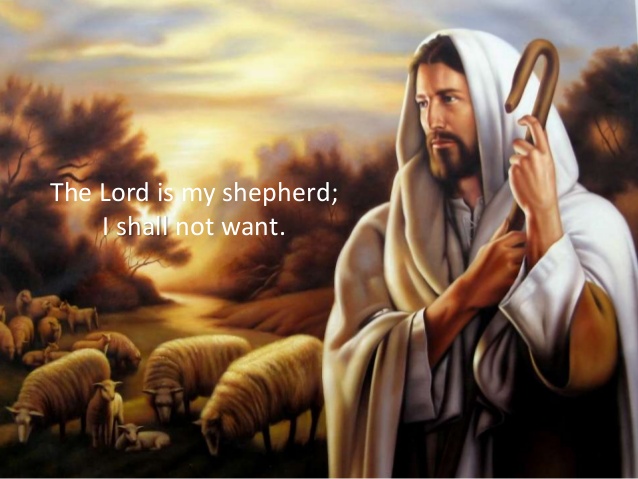
And besides the first reading which speaks of the failure of human leaders to properly shepherd the people of Israel – and God’s promise to appoint a shepherd Himself … and the Gospel, where St. Mark indicates Our Lord’s pity for the people who were “like sheep without a shepherd;” and the Responsorial from Psalm 23 … what do shepherds have to do with today’s readings?

Not much.

Neither is there much connection with astronaut Alan Shepherd.

Rather, today’s Gospel is a prelude to the next month’s worth of Gospel readings on the Bread of Life discourse.


Over the next several weeks, we will shift gears from Mark’s Gospel – which brings us to the point just before Jesus feeds the multitude – to John’s Gospel … Chapter 6 … which is the theology of the Most Holy Eucharist … right from the Savior’s mouth.

St. Paul gives us a theological foreshadowing of this. Telling the Ephesians, and us as well that “the blood of Christ” has brought us near to God, has broken down our divisions, and established peace.
We are “reconcile[d]” with God “through the cross . . . through [Christ] . . . in one Spirit to [God] the Father.


This word – “reconciliation” comes from a Greek word (apokatallassō) that literally means to reverse a separation through a transformation.

This is the point of the Sacraments. Baptism changes us from strangers to God into members of His family. Confirmation moves us from spiritual infancy into spiritual maturity.

We are fed by the Eucharist – which is the whole point of the Mass – and our celebration of the Eucharist at the altar.


Every Mass, we hear this proclaimed at the end of each Eucharistic Prayer: “Through him, and with him, and in him . . .

And the graces we receive are the power of God which brings about the reversal of whatever separates us from God . . . so that we may be transformed by His most powerful grace.

As we approach this altar to receive the Sacred Body and Blood, Soul and Divinity of Jesus Christ, let us pray that we might be immersed in that transforming grace … that removes whatever separates us from our divine inheritance. And that “through . . . with . . . and in” Christ Jesus, we might be raised up as God’s daughters and sons, redeemed in Christ, and filled with the Holy Spirit.

Saturday, July 14, 2018

15th Sunday OT @ St. Helena, St. Apollinaris

HOMILY - FIFTEENTH SUNDAY IN ORDINARY TIME
JULY 14 / 15, 2018
5:00 PM (SAT), 8:00 AM, 11:00 AM (ST. HELENA)
5:30 PM (ST. APOLLINARIS) ORDINARY FORM (ENGLISH) MASSES


Originally formed in 1968, the folk-rock supergroup Crosby, Stills, and Nash – or sometimes Crosby, Stills, Nash, and Young – have recorded 8 studio albums, 5 live albums, 6 compilation albums, 4 video albums, and 19 singles. They music is noteworthy for it’s intricate vocal harmonies and influence on contemporary music. As a group, they are remembered for their tumultuous interpersonal relationships and political activism.

One of their biggest hits, written by Stephen Stills, is titled Suite: Judy Blue Eyes – and consists of four movements, the fourth being a short stanza in Spanish with the back-up vocalists intoning “doo-doo-doo-da-doo” during this coda final verse.


The song is memorializes the imminent breakup between Stills and female artist Judy Collins.

In the second movement – where the tempo slows down to half of the other up-beat sections – almost like a mantra – we hear the phrases “what have I got to lose” or “what have you got to lose” repeated nearly half a dozen times.

Despite its popularity, it ranks #418 among Rolling Stone’s 500 Greatest Songs of All Time.


Today is the 15th Sunday in Ordinary Time – with the Sunday falling on July 15.

Our first reading is from the Prophet Amos – historically the first of the twelve minor prophets – pretty much being “shown the door” by the wicked priest Amaziah. Amos is outside of his homeland, preaching to the Northern Kingdoms, and trying to get across a message of social justice, God's almighty power, and divine judgment.

What does he have to lose? The worst that can happen to him is that he gets to go home to the Southern Kingdom and the Land of Judah.


Amaziah, on the other hand, would have to get rid of the false gods he was promoting, and the false worship – the consequences of which, Amos was trying to warn him and the people about.

In the Gospel, Jesus sends out the Twelve Apostles. His instructions to them are to head out with only the barest of human necessities – but well-equipped with the power and the authority of God.

They may only have the sandals on their feet and the tunic on their backs and a walking stick, but they have been given divine power over evil and illness.

From a material perspective: What do they have to lose?

Finally, St. Paul in the opening of the Letter to the Ephesians speaks of the riches of God bestowed on us as Christians. Not only do we have  “every spiritual blessing in the heavens” but we are to be “chosen . . . holy . . .” and blameless. We are loved and adopted by God “through Jesus Christ, in accord with the favor of [God’s] will” and are forgiven and redeemed “in accord with the riches of [God’s] grace”.


These spiritual riches, as well as knowledge and wisdom of God’s mysteries, are ours in abundance through Christ Jesus Our Lord.

With such an abundance of spiritual wealth – what can the world offer us?

Our inheritance is found in our relationship with God in Christ Jesus. We have everything we need to foster and build this relationship.

At the end of Mark’s 8th chapter, we hear:
What profit is there for one to gain the whole world and forfeit his life? What could one give in exchange for his life? Whoever is ashamed of me and of my words in this faithless and sinful generation, the Son of Man will be ashamed of when he comes in his Father’s glory with the holy angels.
What do we have to lose if we turn our back on Christ?

Everything.


As we approach this altar to receive the Sacred Body and Blood, Soul and Divinity of Jesus Christ – let us pray that we might recognize the passing nature of this world, and the eternal riches offered to us as children of God. May the Eucharist we receive today nourish us and enlighten us to follow Christ Jesus . . . always and everywhere . . . He who is the Way, and the Truth, and the Life.

Saturday, July 7, 2018

14th Sunday OT @ St. Helena

HOMILY - FOURTEENTH SUNDAY IN ORDINARY TIME
JULY 7 / 8, 2018
5:00 PM (SAT), 8:00 AM, 11:00 AM (ST. HELENA) ORDINARY FORM (ENGLISH) MASSES


Laurence Overmire is a contemporary American writer, poet, and activist.

In 2012, he published a book titled The One Idea That Saves The World which puts forth a call to unity. Prior to that he wrote poetry, seeing it as a means to reflect on his life, and calling it “a diary in art.” He called poetry “the art of using language to transcend language.


A quote attributed to Overmire that seems to be making the rounds is:
Expect nothing and accept everything and you will never be disappointed.
While that may sound a bit dark, if one considers that expectation is “a strong belief that something will happen or be the case in the future;” for the most part, attempting to predict the future can create heaps of disappointments. Prognostication, while perhaps entertaining in part, can be a source of much regret.

Today is the 14th Sunday in Ordinary Time.

In the first reading, just before what we have heard read today, Ezekiel has just experienced a powerful vision – so powerful that it knocks him down. He has seen angels, and wheels, a throne, and brilliant fire and light. And it is from this vision in first chapter of his prophecy that we get the images or icons for the four Gospels: A lion for Mark, a man for Matthew, an ox for Luke, and an eagle for John.


Yet, now that the vision has passed – and Ezekiel has literally been knocked over by what he has seen – he get’s no time to rest … no time to process all of this. Rather, despite whatever expectations he had in the midst of this glorious and awe-inspiring vision, he is sent out on a difficult mission to speak the Word of God to the rebellious and obstinate people of Israel.


St. Paul speaks of “a thorn in the flesh” which pummeled him. And despite his expectation that God was going to heal him – at least according to Paul’s will – God’s will is that Paul learn the perfection of God’s power and grace through suffering “for the sake of Christ” realizing in this that “when [he] is weak, then [he] is strong” – because only then can he show forth “the power of Christ . . . dwell[ing] in [him].”

In the Gospel, Jesus returns to His hometown, only to find that the people take “offense at Him” – because He is not what they expect. They think they know him, yet what they know is nothing more than a false expectation – which keeps them from receiving true Faith . . . so much so that the Gospel tells us that Jesus “was amazed at their lack of faith.


As a corollary, in the episode of the healing of the centurion’s servant – which is not found in Mark’s Gospel, but is only in Matthew and Luke – Jesus was “amazed” at the Faith of the centurion.

We commemorate this at every Holy Mass when we echo the words of the centurion saying: “Lord I am not worthy that you should enter under my roof . . .

This is not for us to expect nothing, but rather for us to model our own Faith on the amazing Faith of this Roman official.


And, indeed, no matter our circumstances, provided we live “for the sake of Christ [Jesus],” and provided that through the transforming grace of the Sacraments we allow the “power of Christ [to] dwell with[in us,]” we will experience that power in the mighty works of God in our own lives.

When we allow our expectations to sell ourselves short of God’s glory . . . or worse – allow our limited expectations to sell God short – even to the point of losing Faith, we will struggle in this “valley of tears” and miss out on our birth right as sons and daughters of God most high.

As we approach this altar to receive the Sacred Body and Blood, Soul and Divinity of Jesus Christ, let us pray for a deeper outpouring of the baptismal virtue of Faith. Or perhaps we should pray for an amazing outpouring of this supernatural grace – to transform us beyond our own expectations and rather to accept the infinite graces and power of God into our lives.

Saturday, June 30, 2018

13th Sunday OT @ St. Helena, St. Apollinaris

HOMILY - THIRTEENTH SUNDAY IN ORDINARY TIME
JUNE 30 / JULY 1, 2018
5:00 PM (SAT), 8:00 AM (ST. HELENA)
5:30 PM (ST. APOLLINARIS) ORDINARY FORM (ENGLISH) MASSES


Merriam-Webster defines “victory” as:
the overcoming of an enemy or antagonist;
or:
achievement of mastery or success in a struggle


Mythology and history warn us of Cadmean victories and Phyrric victories – where winning the battle might mean losing the war; or where winning may result ultimately in a situation worse than losing.

We have all experienced wins and losses … and in spite of the ups and downs of life, we have all made it this far … and hope to continue into the near, if not the distant future … whatever that might bring.


Today is the 13th Sunday in Ordinary Time. And we hear from the second half of the fifth chapter of St. Mark’s Gospel.

From the end of the fourth … and the entire fifth chapter of this Gospel cover four situations, all related to a struggle which ends in a victory.


Jesus calms a storm: showing His victory over danger.


Jesus cures a possessed man: showing His victory over demons.


Jesus cures a sick woman: showing His victory over disease.


Jesus raises Jairus’ daughter from the dead: showing His ultimate victory … even over death itself.

The first reading from the Wisdom of Solomon reminds us that much of what we experience in this life comes from the choices we make. And that a life of righteousness – that is a right relationship with God – prepares us for safety, peace, health, and life.

St. Paul in the Second Letter to the Corinthians admonishes us to imitate Jesus’s life through a generosity of spirit, and by living out our Baptism through Faith, Hope, and Love.

In sharing His Divine Life with us, God gives us the opportunity to honor His gift by generously conforming ourselves to Christ and cooperating with the grace and the power of the Holy Spirit.


Christ’s passion and death was not a Phyrric or Cadmean victory. Rather, His life – and especially His passion, death, and resurrection – show forth not only His obedience to the Father, but even more so, His enthusiastic, willing, and generous acceptance of His mission … doing whatever it might take … to come to the aid of sinful humanity and to repair the damage brought about by the folly of the devil.

Through His complete and total self-gift … and by His example … Christ Jesus attains the Victory for us … provided we are willing to choose Him … and Him alone … over everything else and anything else … that might distract us from God’s call on our lives.


Our generosity in our relationship with God in Christ is always rewarded by God’s generosity to us through the gifts and the fruits of the Holy Spirit. If we hold back, God is still generous – but we will suffer the consequences of our own bad choices … which limit the action of God’s grace to work through, with, and in us … and to transform us … to transform our lives … and to transform our world.

As we approach this altar to receive the Sacred Body and Blood, Soul and Divinity of Jesus Christ … let us pray that we might be “all in” for God. Let us make a firm choice to live our lives for Jesus Christ … through Him, with Him, and in Him. Knowing that whatever may come our way, the ultimate victory is our in Christ Jesus Our Lord.

Sunday, June 24, 2018

Nativity of St. John the Baptist @ St. Apollinaris, St. Helena, Holy Family

HOMILY - NATIVITY OF SAINT JOHN THE BAPTIST
JUNE 24, 2018
8:00 AM ORDINARY FORM (ENGLISH) MASS (SAINT HELENA)
12:00 PM EXTRAORDINARY FORM (LATIN) MASS (HOLY FAMILY)
5:30 PM ORDINARY FORM (ENGLISH) MASS (SAINT APOLLINARIS)


Today is the Solemnity of the Nativity of St. John the Baptist.

The Church only celebrates three “Nativities” – or “Birthdays:” Jesus’ birthday on Christmas, December 25; Mary’s birthday on September 8; and today, the birthday of St John the Baptist, June 24.


We all have a pretty good idea who St. John the Baptist was. The parish 10 minutes south of us near downtown Napa is named for St. John the Baptist. As is the parish nearly 90 minutes northwest in Healdsburg.

John the Baptist is also called the Forerunner or the Precursor … referring to his role in preparing the way for Jesus.


In today’s Gospel, we hear the confusion when John’s father does not want his son to be named after himself – but rather fulfills the Archangel’s command that he be named “John;” a name which means “God is gracious.” And how fulfilling that command frees Zechariah from the 9 month God-imposed silence … because he doubted the message of Gabriel.

The reading from Isaiah speaks of a servant whom God calls from before he was born. This text can be applied to Jesus, John the Baptist, or to any one of us. God calls all of us, and today we can reflect on the last of the prophets – St. John the Baptist.


Finally, in the second reading from Acts, we hear the beginning of the first recorded sermon of St. Paul.

This sermon of St. Paul’s, can be broken into three parts: preparation, declaration, and application.
In the first part, “preparation,” Paul speaks about how God prepared the Jewish people for the coming of the Messiah. This part is easy. The Jewish people lived in a far away land, and were different than the Pagans. For his listeners, Paul was recounting history … about a people – a “they” – who lived in a distant land.


In the second part, “declaration,” Paul speaks about what God desires to do for anyone who will believe in Jesus and the Gospel. This would have gotten their attention – telling them what God is going to do for “you.” While the old adage says “it is better to give than to receive,” there is always excitement when someone gives “you” a gift.

And in the third part, Paul tells his listeners what it is that they need to do. Here is the hard part – what do “I” have to do … in order to receive the gift they must hear the Gospel, repent and believe, and be Baptized.


Here we see how Baptism was already an integral part of the early Church. Yet while John baptized to inspire his followers to repentance, the Baptism in the Church is in the name of the Father, and of the Son, and of the Holy Spirit – and is a baptism of regeneration … washing away sins, especially the stain of original sin.


One is symbol – brought by the forerunner; the other is Sacrament – given by God’s graciousness.
And so, today we honor St. John the Baptist, and commend ourselves to his intercession.

May we, who receive today the Sacred Body and Blood, Soul and Divinity of Jesus Christ … in recalling our own Baptism, pray for true repentance. And may the graces we receive in this Eucharist today strengthen our resolve to persevere in following the call God has placed upon each and every one of us.

Sunday, June 17, 2018

11th Sunday OT @ St. Apollinaris Parish

HOMILY - ELEVENTH SUNDAY IN ORDINARY TIME
JUNE 17, 2018
8:00 AM (ST. HELENA), 10:30 AM, 5:30 PM ORDINARY FORM (ENGLISH) MASSES


Best known for their Fairy Tales, the Grimm brothers (Jacob and Wilhelm) were born in 1785 and 1786.

Lesser known is that both brothers lived difficult lives, worked hard to continue their educations without support, and supported their families through hard work from a young age.


Jacob was a linguist, a lawyer, and a writer; and Wilhelm an author and anthropologist.

Not only did they compile and edit several editions of their books of fairy tales, but they also worked together on creating a German dictionary.


As a linguist, Jacob is known for what is called Grimm’s Law which shows the relationship between b, p, and f; d, t, and th; and g, k, and x. For example, the English word “brother” correlates to the German word “bruder;” where the d and the th are somehow historically connected to a more ancient parental language.

Despite their humble beginnings, the Brothers Grimm have their place in not only German but western culture – through hard work, perseverance, and study.

Today is the 11th Sunday in Ordinary Time.


In the first reading we hear a prophecy told in a clever story.

A prophecy is more than a prediction. The Hebrew prophets spoke of future things using the past tense – that is, as something that already happened … but that was still waiting to be revealed.
While Ezekiel is speaking about trees, this is not a proclamation on horticulture. He is speaking of future kings, and of one king who would carry on the dynasty of Kings David and Solomon – after it would appear that the line had been destroyed. That is the shoot that is transplanted from the withered tree.


St. Paul speaks to the Corinthians about the realities of Christian death. The early Christians struggled wondering “when is Jesus returning?” Next week, next year, next millenium? Here we are in the second Christian millenium – two thousand years – and we still struggle.

But in order to make it something they could not only remember, but perhaps understand, Paul speaks of “being at home” … and that in this life, “we are at home in the body,” while in the next, we “go home to the Lord.” Both are homes, both are part of our Christian journey.


And finally, we hear two of Our Lord’s Kingdom parables. Parables are more than fairy tales or prophecies or allegories.

The parables of Jesus are meant to reveal Divine realities by using common things and activities. In the light of His Incarnation, this is logical – because if God became man, He most certainly would use visible human activities and objects as a way to convey the unseen mysteries of God.

And apart from the Gospel verse “The seed is the word of God, Christ is the sower,” the seed can also be seen as God’s grace poured out on humanity – and taking root, and bringing with it transformation in us and in our lives. Or that like small seeds, grace is barely noticeable, yet can have an enormous effect.


It is important to not ascribe divine power to fairy tales. Snow White may teach a moral lesson, but she is not revealing the mysteries of God. On the other hand, turning all prophecies and parables into fairy tales or wisdom lessons, denies the whole of Salvation History and God’s unfolding of His mysteries – which are fully revealed in the Person of Jesus Christ.

As we approach this altar to receive the Sacred Body and Blood, Soul and Divinity of Jesus Christ – let us pray that we might be inspired by God’s grace to a deeper understanding and experience of His revelation. And as we continue this Sacred Liturgy – may the signs and symbols of the Mass point us to higher things – ultimately to God … Father, Son, and Holy Spirit.

Saturday, June 9, 2018

10th Sunday OT @ St. Helena Parish

HOMILY - TENTH SUNDAY IN ORDINARY TIME
JUNE 9-10, 2018
5:00 PM (SAT), 8:00 AM ORDINARY FORM (ENGLISH) MASSES


Rhetoric is one of the three ancient arts of discourse – collectively known as the trivium – that is, grammar, logic, and (of course) rhetoric.

Rhetoric is the art of informing, persuading, or motivating an audience. It requires the speaker understand, discover, and develop words, ideas, and knowledge; and to appeal to reason, emotion, and beliefs; crafting words through invention, arrangement, style, memory, and delivery.


The orator Hermagoras of Temnos, from the second century B.C., took the septem circumstantiae of Aristotle – that is, the seven elements of circumstances – as a starting point for exploring any subject rhetorically.


Those seven elements are: 

Quis, quid, quando, ubi, cur, quem ad modum, quibus adminiculis.
And if your Latin is rusty, they are:
Who, what, when, where, why, in what way, by what means.


A mnemonic can be found at the end of The Elephant’s Child in Rudyard Kipling’s Just So Stories, at the beginning of a poem, which reads:
I keep six honest serving-men:

(They taught me all I knew)
Their names are What and Where and When

And How and Why and Who.
These are sometimes called, in English, The Five W’s – questions whose answers are useful in gathering information. They are used in journalism, writing, research, or investigations as a sort of checklist for quickly getting to the bottom of things. Answering each of these questions with a factual answer can provide a basic outline of what is going on.

Today is the Tenth Sunday in Ordinary Time, and our readings present us with questions and answers.


In the Old Testament Reading, our First Parents have just fallen from grace. God Himself enters the scene and asks them three questions:
Where are you?
Who told you [this]?
Why did you do [it]?
These three simple questions form a sort of examination of conscience – which can be helpful when dealing with a personal failure or shortcoming.

In the Second Letter to the Corinthians, today’s reading has Paul providing answers to questions about Faith and Hope, suffering and eternity.


In the Gospel, Jesus’ relatives must have been asking questions, too; and they have come to the conclusion that Jesus is “out of his mind.” When in fact, the reality of the situation was: Jesus was certainly “out of their mind” – that is, thinking outside of the box. But there is no question that in doing His Father’s will, Jesus is always thinking with the mind of God.

Which raises the question: How are we to understand more fully the mind of God, or the plan of God, or the power of God … with only the use of a limited human intellect. God is infinite, we are finite. God is all-knowing, we need instruction. God is immortal, we only live for what seems a short time.


We need to rely on the the grace of God and the gifts of God … poured out on us through the Sacraments … and in particular through the Gifts of the Holy Spirit – so that we can aspire to lift our minds to Divine things.

The gifts of Wisdom, Knowledge, Understanding, and Counsel inform and direct our minds; in order to raise our thoughts to the heights of God. While the gifts of Fortitude, Piety, and Reverence direct our will toward God … and in the direction of God’s will and God’s plan.

In the Sacraments, we answer questions all the time – Baptism, Matrimony and Holy Orders all require the responses: “I do,” “I do,” “I do.”


And shortly, we will profess our Faith together, answering the question: “What do I believe?”

At the end of the Gospel, Jesus asks: "Who are my mother and my brothers?” And immediately gives the answer: “[W]hoever does the will of God is my brother and sister and mother.” Which begs the question for us – are we doing God’s will? And if not, what is keeping us from putting into action those words we will all pray before Communion: “Thy will be done.


As we approach this altar to receive the Sacred Body and Blood, Soul and Divinity of Jesus Christ, let us pray that our answer to God’s call and God’s Will … will always be “Yes.” And in that “yes,” we can be assured that we are living through, with, and in Christ; attuned to and knowledgable in God’s Word; and doing all we can to follow Him – the Way, the Truth, and the Life.