Saturday, July 22, 2023

16th Sunday in Ordinary Time @ Ss. Francis and Clare, Birch Run, MI

Luca Signorelli, born Luca d'Egidio di Ventura in 1441 in Cortona, Italy; was an artist of the Tuscan school, although he spent most of his time in Rome and Umbria. 

It was in Orvieto that he produced his life’s masterpiece: five frescoes depicting events from the Apocalypse in the chapel of the Madonna of San Brizio in the Cathedral or Duomo of that city.

Beginning with “The Preaching of the Antichrist,” the series proceeds through “The End of the World,” “The Resurrection of the Flesh,” “The Damned in Hell,” and “The Elect in Paradise.” All of these surrounding the existing art on the lower walls done 50 years before by Fra Angelico – “Christ in Judgment,” and “Angels and Prophets.”

In the first of Signorelli frescoes, “The Preaching of the Antichrist,” we see what at first might appear to be Christ preaching to the crowds. The resemblance ends upon closer examination, as this false Christ has horns; and receives his message from Satan, who is whispering into his ear and controlling him like a puppet.

In the fresco, the Antichrist displays wonders and miracles, but he is surrounded by corruption and wealth, massacres and iniquities, horrors and chaos.

Signorelli died in 1523, 500 years ago this October. 

A major exhibition of his works began a month ago in his hometown of Cortona, and will continue for the next 3 months.

Today is the 16th Sunday in Ordinary Time. 

The brief four verses we heard from the Book of Wisdom are a brief profession of faith, rooted in the Old Testament, but speaking of righteousness – or what I prefer to translate as “right relationship” – the proper state of humanity in harmony with God.

The God of Israel is unique. Not only is He “one,” but He is the “one” creator of all. He is “all powerful,” and despite that power, He is good, moral, and just. God is full of kindness, mercy, and forgiveness. All unique qualities in a pagan world with many, fickle, capricious gods. 

In the two verses from St. Paul’s Letter to the Romans, we hear how the Spirit accompanies us through the difficulties and trials of this world, assisting us through Supernatural Grace, to live according to the most Holy Will of God. The Supernatural Grace through Baptism, and all the Sacraments, especially the most Holy Eucharist.

The Gospel, on the other hand, presents three parables of Christ – or perhaps three similes is a better term – Our Lord attempting to give us a glimpse into just what is the Kingdom of God.

Only one explanation is given, for the first parable.

The Kingdom of God is like wheat and the tares growing together, not because they are equal or identical, but because they will be separated at the harvest.

Tares are known as the darnel, lolium temulentum, which initially appears identical to wheat, and even the grains appear similar. But darnel flour is poisonous and imparts a bitterness if it is accidentally used in cooking. 

Because of this similarity, it is difficult to separate the two.

The world is filled with many contradictory voices, some which confuse or conflate, and others which are outright noxious and dangerous to the soul. Some parts of these messages may appear similar to the Gospel, but fall short of the fullness of the Gospel. 

In this world, it may be easy to put on pious externals with a wicked heart. We may not notice the difference, but God can separate the elect from the damned … and He will.

A friend and seminary professor of mine would often remind us: “half of the truth is not the truth.” And in a similar way, half of the Gospel is not the Gospel.

Jesus Christ has told us that He is “the Way, and the Truth, and the Life,” and we must ensure that in following Him, we allow Him to be “our Way, our Truth, and our Life.” 

As we approach this altar to receive the Sacred Body and Blood, Soul and Divinity of Jesus Christ, let us make a firm stand for Christ and Christ alone. Let us reject what is not of God, and embrace Jesus Christ as our Way, our Truth, and our Life. And let us then go forward through, with, and in Christ Jesus; that we may follow Him, and Him alone.

Saturday, June 17, 2023

11th Sunday in Ordinary Time @ Ss. Francis and Clare, Birch Run, MI

This weekend we celebrate Father’s Day. Happy Father’s day to all ...

My own Dad handed on to myself and my siblings a love of reading – by taking us to the Public Library on weekends to check out books; an ability to work on … and sometimes fix … things – by teaching us to work with tools; to problem solve by teasing us with riddles and puzzles; to work hard – by his own example of hard work; and above all to love and to forgive – because we weren’t always the best of kids … or maybe that was just me.

Dr. Scott Hahn, a rather well-known theologian … in a talk on the Lord’s Prayer – the “Our Father” – makes the observation that we do not call God “Father” because He is _like_ a Father. Rather, Dr. Hahn says that in the truest sense “Father” is “God's name, His personal identity, [since] God is Father eternally.” 


The rest of us – those who are male parents or those who bear the professional title of “Father” – we are the ones who are _like_ a father … _like_ our Heavenly Father – namely, God.

And so, based on my life experience, and seeing God’s Fatherhood reflected in my own Dad, has shown me that God reveals what things are … by teaching us, challenging us, guiding us … as the old Catechism’s said: “to serve Him in this world and to be Eternally happy with Him in the next.” 

God sent His Only-Begotten Son to show us how to live … and not just live, but how to “live hard.” And of course in God’s eternal plan, he also shows us how to love and how to forgive; how to be merciful and how to reconcile.

Today is the Eleventh Sunday in Ordinary Time. 

In the Gospel we hear the call of the Apostles. The word Apostle comes from the Greek word meaning an emissary or an ambassador. It literally means “one who is sent,” and as God the Father sent Jesus into the world to redeem the world … to redeem and save us; Jesus sends the Apostles as emissaries of “the Good News,” the Gospel of Salvation.

And in this passage, we are told the names of the Twelve Apostles … Simon, meaning “listen;” Andrew, meaning “strong;” James, meaning “to follow closely;” John, meaning “gracious;” Philip, meaning “warrior;” Bartholomew, meaning “farmer;” Thomas, meaning “twin;” Matthew, meaning “gift of God;” Thaddeus, meaning “from the heart;” and Judas, meaning “praise.” 

Jesus calls them _by name_ … not by title, not by function. 

In the Garden of Eden, God asked the man to name what He had created. But only we – individual humans, are made in the image and likeness of God – only we have proper names, eternal souls, and inherent dignity. 

Each and every one of us is called by name, called by God, through our own Baptism, to be “a chosen race, a royal priesthood, a holy nation, a people of his own …” 

This means that we are to worship God, love one another, and to use the things of this world to build the Kingdom of God and spread the Gospel. But we must be careful not turn this around, and end up worshipping things, using one another, and leaving God completely out of our lives.

Jesus Christ calls us to follow Him (closely), to listen (and hear and obey), to be strong (when we are helpless), to be gracious (and merciful), to receive His gifts, to work in the world, to battle the temptations of the world, the flesh, and the devil; and to praise (and worship) Him and Him alone, from the (depths of the) heart. 

And then He sends us, as His emissaries … to live out the Gospel in our lives … by what we say and what we do. Every day of our lives.


As we approach this altar to receive the Most Holy Body and Blood, Soul and Divinity of Jesus Christ – may we hear God’s voice, through His Son Jesus Christ, calling us to follow Him … He who is our Way, our Truth, and our Life. 


Wednesday, May 10, 2023

Wednesday of the 5th Week of Easter @ St. Elizabeth Seton School, Golden Gate, FL

 This morning we heard Jesus tell us that He is the Vine and that we need to remain in Him, stay connected to Him, and to be part of Him. We do this by being part of the Church. And on Sundays and on Solemnities, we hear these four words in the Creed: ONE, HOLY, CATHOLIC, and APOSTOLIC.

We are ONE because we are connected to Christ as the Vine. We aren't all tall or short, old or young, dark or light, skinny or fat. We are unique, but we are all part of the Church and we are all part of Christ. God is one, Christ is one, and the Church is one.

We are HOLY not because of anything we do, but because God shares His Grace through Christ in the Power of the Holy Spirit. If we disconnect from Jesus, we unplug that power for holiness. And we are called to be holy as God is holy. God is Truth, God speaks the Truth, and God's thoughts are True. When we think, act, and speak the truth in Christ, we show forth God's holiness in our lives.

We are CATHOLIC, not just because it's the name on the sign out front. We are Catholic because we are universal. We allow all sorts of people into the Church, and we seek out a diversity of people; because all are called to be saved in Christ Jesus.

Finally, we are APOSTOLIC. First, because we can trace our faith to the Apostles, but also because the Greek word apostello means to be sent. And we, too, are sent out to spread the Gospel by what we say, think, and do.

So, let us remain in Christ by remaining in His Church: ONE, HOLY, CATHOLIC, and APOSTOLIC. Because, like we heard in John 15:5, "without [Jesus] we can do nothing." The converse of which is: with Jesus, we can do everything. So let us do everything today through, with, and in Christ Jesus our Lord.

Saturday, February 18, 2023

7th Sunday in Ordinary Time @ Ss. Francis and Clare


The first federal courthouse in Detroit was built in 1896 on Lafayette Street. The original cost of that building was roughly $1,000,000.

By the early 1930s, the federal courts had outgrown the original 19th century building, which was targeted for demolition, to be replaced by a newer, larger building.

Enter Chief Judge Arthur J. Tuttle, dubbed “The Judge who would not budge.” Tuttle refused to approve the destruction of the first building and the subsequent construction of the new building – unless that particular courtroom was preserved.

That room consisted of an elaborately carved judge’s bench made of East Indian mahogany; and flanked by two 12-foot columns made of white marble with pink marble bases; each capped with four lions holding up a globe. Around the room are symbols from Greek mythology and Biblical themes … all related to the administration of justice and the law.


By the 1930s, the value of the marble alone exceeded $1,000,000. Leading the press to refer to it as “The Million Dollar Courtroom.”

It currently sits atop the Theodore Levin courthouse, as rooms 732, 733, and 734; reserved for the chief judge of that federal court.


Today is the 7th Sunday in Ordinary Time.

Both the Gospel reading from St. Matthew and the first reading from Leviticus address the second half of the Ten Commandments – which address the laws on interactions with others. 

The Gospel is a continuation of last Sunday’s, where Jesus states the Commandment, but then raises the bar by changing the idea from one of external observance to one of internal conversion.


St. Paul, in his First Letter to the Corinthians, speaks of our role as being the “Temple of God,” filled with the Spirit of God. As in any building, it is important that we build on a proper foundation, using appropriate materials, following an approved plan, and doing so with proper motives.

For us, as Christians, the Foundation is always Christ and the Gospel. The materials are Scripture and Tradition. The plan is God’s will. And the motive is for the Greater Glory of God.


The overall goal can be found in the Greek word, DIKAIOSYNE. A word often translated as justice or righteousness; but which has a broader and deeper meaning that perhaps is best translated as “right relationship.” Meaning our relationship with God and with one another.

On Wednesday, we will begin the Season of Holy Lent. The time where we take 40 days to repent, renew, and rebuild our hearts, our minds, and our lives. 

In the 19th century, every day of Lent was a day of fast. Meat was off the schedule on Fridays and Saturdays; and for the rest of the week could only be eaten at the principal meal. 

Now, we are asked to fast on Ash Wednesday and Good Friday; and abstain from meat on the Fridays of Lent. Sounds easy on paper, but is not always easy in practice.

Traditionally Lent is marked by Prayer, Fasting, and Almsgiving. 

I would encourage you to consider attending weekday Mass. 


Stations of the Cross will be prayed immediately following the Wednesday Mass. 

And starting March 1 (here) we will have Wednesday evening soup suppers and talks rotating among our church the other Christian denominations in Birch Run, Burt, and Taymouth.

As we approach this altar to receive the Sacred Body and Blood, Soul and Divinity of Jesus Christ; let us prepare ourselves for Lent. Let us take this coming period of 40 days, and seek to strengthen our relationship with God and with one other. Let us seek reconciliation with those we may be estranged from. And let us build up ourselves and our Church as a majestic temple to the greater glory of God.

Sunday, January 29, 2023

4th Sunday in Ordinary Time @ Ss. Francis and Clare

HOMILY 4TH SUNDAY IN ORDINARY TIME
JANUARY 28/29


You Can’t Take It With You is a comedic play that premiered in 1936, and was adapted for the screen in 1938. It won the Pulitzer Prize for Drama in 1937; and the Academy Award for Best Picture and Best Director in 1938. It was also re-made in 1979 starring Art Carney and Jean Stapleton.

The story is about two families. One a strait-laced family of bankers; and the other an erratic and wacky family of incompetent madcaps. The banker’s son falls in love with the daughter of the other family. Simple, right? What could go wrong?

Near the end of the play, the patriarch of the other family tells the patriarch of the bankers: 

You’ve got all the money you need. You can’t take it with you. … And what’s it got you? Same kind of mail every morning, same kind of deals, same kind of meetings, same dinners at night, same indigestion. Where does the fun come in? Don’t you think there ought to be something more. … We haven’t got too much time, you know–any of us. 

Today is the 4th Sunday in Ordinary Time.

In our first reading we hear from the Prophet Zephaniah – one of the 12 minor prophets, and dating from the 7th century BC. He admonishes his listeners to submit to God’s direction in the Law.


In the second reading, from the First Letter to the Corinthians, St. Paul tells them to consider how the ways of the world are not always in line with God’s ways.

And in St. Matthew’s Gospel, we hear the – perhaps all-to-familiar – Beatitudes. 

Matthew’s version of the Beatitudes are read on this particular Sunday, as well as on a Monday in June. It is also read on (1) All Saints Day and (2) All Souls Day; (3) at Funerals, and (4) Ordinations, and (5) Confirmations. And it is offered as one of many options for (6) Marriage.

Eight times in the Lectionary. Eight uniquely different events. Maybe the Church is trying to tell us something?


Blessedness – or

Beatitude is a possession of all things held to be good, 
from which nothing is absent that a good desire may want.

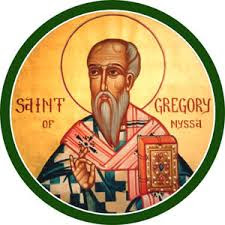
At least according to the 4th century Saint, Gregory of Nyssa. But he goes on to say that Beatitude – being blessed – can only be fully understood in comparison to it’s opposite: misery, affliction, and suffering. 


We need to look at what we have, and what we don’t have … both materially and spiritually. Where are we lacking, and where are we fulfilled. 

Material things may make us comfortable in this world. But sometimes, the things we own end up owning us. And to possess the good things described in the Beatitudes … those spiritual goods that we actually can take with us … into Eternity.

The Beatitudes have been called the commandments for the Kingdom. And, indeed, they are guides to Eternal Happiness and Divine Joy.

The Beatitudes are our guide to the path into Eternity, and the goods they embrace are eternal goods the draw us closer to God’s eternal Kingdom.


As we approach this altar to receive the Most Holy Body and Soul and Divinity of Jesus Christ, may the graces we receive in this Sacrament empower all the other Sacraments we have received … for a deeper outpouring of Faith, Hope, and Love. May these Divine gifts fill us to overflowing, and guide us – ever closer – to union with God – Father, Son, and Holy Spirit, and direct our actions in this world, so that we might be eternally blessed in the next.

Saturday, March 26, 2022

4th Sunday of Lent @ Ss. Francis & Clare

HOMILY 4TH SUNDAY OF LENT
MARCH 25/26, 2022


Today is the 4th Sunday of Lent.

We’re past the half-way point of the six weeks of Lent. The vestments are rose-colored as a sign … giving us an opportunity to re-evaluate our Lenten practices. Are we being too hard on ourselves? Or have we missed out on the past 25 days, and maybe need to step up our game.

Today is known as “Laetare” Sunday, from the first word of the Entrance Antiphon, which begins, “Rejoice, Jerusalem, and all who love her. * Be joyful, all who were in mourning; * exult,” taken from chapter 66 of the Prophet Isaiah.


Also, today, we heard the Gospel reading of the Parable of the Prodigal Son.

I spoke about this on Ash Wednesday, borrowing the acronym AHA to give us a formula for repentance: Awakening, Honestly, and Action as a means to change our spiritual situation for the better.

That lengthy reading, which is most likely almost too familiar to us, presumes some things that may escape us 2,000 years after its first telling.

In the Jewish inheritance laws, the older son gets double what his siblings get. So, in this case of the two sons, the younger Son made off with one-third of the Father’s estate. Oddly, this is not only legal – to request your inheritance before your Father’s death – but to cash in and spend it was also legal. 

Legal, but not necessarily the most loving thing to do, and speaks to a broken relationship.


Continuing in the Law, Deuteronomy 21:18-21 says: “If someone has a stubborn and rebellious son who will not listen . . . bring him out . . . [and] all his fellow citizens shall stone him to death.” 

This is not the Pharisees and the Scribes adding extra burdens to the Mosaic Law. This is the Mosaic Law. 

What was due to the Prodigal Son on his return to his home town? Death.

Which raises a question: Why did the Father run out to meet his Son? To get there first? Before he was stoned to death? Is the Father’s embrace a paternal human shield to keep his Son alive?


After all, wealthy Middle-Eastern patriarchs don’t run as a rule. But here, the Father ran out not only to meet his wayward Son, but possibly to save his life.

The Son’s plan was to return as a servant – as a slave – on his Father’s estate. But slaves don’t wear sandals, robes, or rings.

The Father’s actions make the point that the Son is his Son … no matter what has happened.

This is the joy of the Son’s return.

This is the joy of the Father’s forgiveness.


But, the flip-side of this is seen in the actions of the older Son. 

Here the sin is not external, but internal.

The older Son is offended by the generous love shown by his Father, while he also refuses to forgive his errant Brother.

The older Son’s un-forgiveness also speaks of broken relationships.

The Father is free to do as he pleases with his possessions, but the older Son is not justified in his un-righteous anger, pride, or selfishness.


Forgiveness is the key here. Forgiveness heals relationships … brings joy … and restores what was lost. 

As we approach this altar to receive the Sacred Body and Blood, Soul and Divinity of Jesus Christ; let us pray to forgive. Five weeks ago, we exercised the Eastern practice of asking for and giving forgiveness – “Forgive me, a sinner.” and “God forgives, and so do I.” 

As we move through the central point of the Lenten Season, may we engage and exercise the graces of forgiveness in our own lives and our personal situations. 

Let us experience the joy, healing, and restoration of forgiveness as we move closer to Holy Week, the Paschal Triduum, and Easter.

Saturday, February 12, 2022

6th Sunday of OT @ Ss. Francis and Clare

HOMILY 6TH SUNDAY OF ORDINARY TIME
FEBRUARY 12/13, 2022


The 1987 movie, The Princess Bride, was produced and directed by Rob Reiner (Meathead from All in the Family), and had among its cast Andre the Giant, Peter Falk (Columbo), Fred Savage (The Wonder Years), and Billy Crystal (Saturday Night Live.)

The movie is the acting out of a book that a grandfather reads to his sick grandson – who is not at first impressed. It’s a love story, after all. And it’s dull – all that mushy stuff – until the sword fights, soldiers, and pirates.

Eventually, at what seems the end, the future princess Buttercup is about to be wed to the evil prince Humperdink. And a character known only as “The Impressive Clergyman” in the credits begins the ceremony.

MAWAGE is wot bwings us togeder tooday,
MAWAGE, that bwessed awangment,
that dweam wifin a dweam...
And wuv, tru wuv, will fowow you foweva...
So tweasure your wuv.

Thankfully, the wedding is interrupted before the vows are completed by the Dread Pirate Roberts, Buttercup is kidnapped by the pirate, who turns out to be her childhood love, Westley. After a sword fight and a seeming loss, Westley chases off the prince, and our lovers ride off on horseback … assumedly to a life lived happily ever after.

It’s available on Hulu and Disney+ if you have a subscription, or for $5 on Amazon Prime, Apple TV, and Vudu. YouTube wants $14,99 … but I don’t recommend spending that much money for a 34 year old movie.

Today is the 6th Sunday in Ordinary Time.

It is also World Marriage Day.

And our first two readings sort of make that really difficult. But maybe not.

Yes, Jeremiah speaks of curses, but he goes on to speak of blessings. 

Paul speaks of futility and death, but brings us back to eternal life in the midst of faith and hope.

And the Gospel. 

The reading of the Beatitudes may seem to be so familiar that we don’t really listen. Out of the four Gospels, they are only found in Matthew and Luke.

This reading from Luke only occurs twice in the entire Lectionary. Today, once every three years, and on a Wednesday some time in September.

Matthew’s version, on the other hand, would have been two weekends ago last year, and on a Monday in June. 

It is also read on All Saints Day and All Souls Day; at Funerals, Ordinations, and Confirmations. And last, but not least, it is one of the many options for celebrations of Matrimony.

The word translated here as “blessed” has also been rendered as “happy.” Depending who’s approving what translation, it goes back and forth every 20 or 30 years. Blessedness – or

Beatitude is a possession of all things held to be good,
from which nothing is absent that a good desire may want.

At least according to the 4th century Saint, Gregory of Nyssa. And he goes on to say that Beatitude – being blessed – can only be fully understood in comparison to it’s opposite: misery, affliction, and suffering. 

And so, our readings may very well have a point. There are blessings, and there are curses. And hopefully you are married to the former, and not the latter. There is at times futility, and we all do die; but faith, and hope, and love help us to chart the stormy waters of the messiness of life … leading us to resurrection with Christ. 

And, of course, there are blessings and woes … but in the end, eternal life and in-between some happiness.

As we approach this altar to receive the Most Holy Body and Soul and Divinity of Jesus Christ, may the graces we receive in this Sacrament empower all the other Sacraments we have received … for a deeper outpouring of Faith, Hope, and Love … and may we receive, at the table of the Lord, many blessings … and much joy and happiness.