Showing posts with label Ascension. Show all posts

Saturday, May 15, 2021

Ascension Sunday @ St. Peter Cheasaning / St. Cyril Bannister

HOMILY - THE ASCENSION OF THE LORD
MAY 15/16, 2021

The Hierarchy of Knowledge or DIKW Pyramid is a class of models for representing structural or functional relationships between Data, Information, Knowledge, and Wisdom – hence, DIKW.

Numerous individuals may have invented it – economists, educators, engineers, geographers, ethicists, theorists, and researchers . . . from America, Ireland, China, Czechoslovakia, and England.


But the earliest reference to such a hierarchy can be found in T. S. Elliot’s 1934 play The Rock, which contains the chorus:

Where is the Life we have lost in living?
Where is the wisdom we have lost in knowledge? 
Where is the knowledge we have lost in information?

A fundamental premise of the Hierarchy of Knowledge is that:

information is defined in terms of data, 
knowledge [is defined] in terms of information, 
and wisdom [is defined] in terms of knowledge.

Trying to break this down into verbs – action words – a potential list might be: measure, analyze, classify, understand.

In other words, knowing about someone is not the same as knowing someone . . . and knowing someone is not the same as being in relationship with someone . . . and being in relationship with someone does not always rise to the level of loving someone.

Today is the Sunday on which we celebrate the Ascension of the Lord – when 40 days after Easter, Jesus “was taken up into heaven and took his seat at the right hand of God” as we heard in St. Mark’s Gospel.

In the first reading from the Acts of the Apostles, we hear of the faith of the early Christians. And, perhaps we might consider how fortunate they were to have lived in a time so close to Jesus’ resurrection, seeing the lively power of the Holy Spirit, and living each day with an eager anticipation of the coming of the Kingdom on Jesus’ imminent return.

2,000 years seems like a long, long time, and perhaps we may not have the same level of hope as those first Christians did.

Yet, St. Paul speaks of hope in his Letter to the Ephesians, calling us to move beyond merely knowing God to living in the Power of God.

Because, for a Christian, knowing God is salvation . . . while growing in our relationship with God is sanctification . . . and ultimately – in eternal glory – we will have perfect knowledge of God, when we see Him face-to-face.

St. Paul points out that in knowing that “hope that belongs to [God’s] call . . . the riches of glory in [God’s] inheritance [is] among [His saints] . . . [in] the surpassing greatness of [God’s] power”

Our life in Christ is not only knowing about Jesus but requires that we live in imitation of Him in the here and now. Yet going beyond that, it is ultimately found in the life to come – the future glory of with God in Christ – in eternity. 

That is, more than just be-ing, Christians are called to a life of be-come-ing . . . living not only in a present-tense, but in a future-tense . . . in anticipation of God’s call. This is hope!

St. Paul tells us elsewhere in Scripture:

. . . hope that is seen is not hope. 
For who hopes for what he sees?
But if we hope for what we do not see,
we wait for it with [patient] endurance.


Next week is Pentecost. And the tradition tells us that the Apostles and disciples prayed for 9 days – the first Novena – from the Thursday of the Ascension until Pentecost Sunday. They prayed in hope for the coming of the Holy Spirit . . . that “surpassing greatness of [God’s] power” in the outpouring of the Holy Spirit.

As we approach this altar to receive the Sacred Body and Blood, Soul and Divinity of Jesus Christ – let us pray for a deeper outpouring of the Gifts and Fruits of the Holy Spirit in our hearts and minds. May we who know Christ in the Eucharist come to know, even more, the “surpassing greatness” of power of His Holy Spirit in our daily lives.

Saturday, May 27, 2017

Ascension Sunday @ St. Apollinaris Church

HOMILY - EXTERNAL SOLEMNITY OF ASCENSION ON SUNDAY  (YEAR A)
MAY 27-28, 2017
4:30 PM (SAT), 9:00 AM ORDINARY FORM (ENGLISH) MASSES


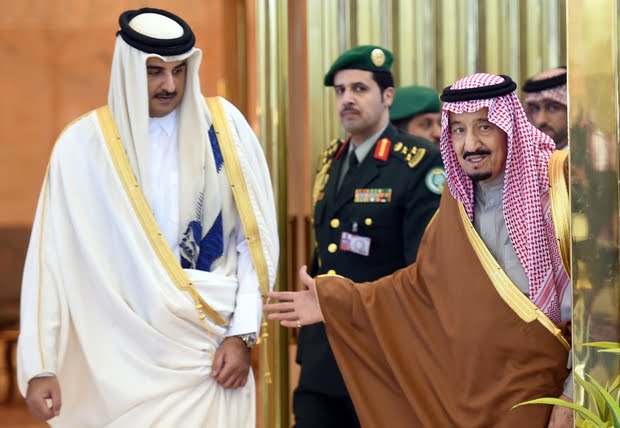
“Elizabeth the Second, by the Grace of God, of the United Kingdom of Great Britain and Northern Ireland and of Her other Realms and Territories Queen, Head of the Commonwealth, Defender of the Faith” … – … or more simply, Queen Elizabeth … – … is the longest reigning monarch on the face of the Earth … by a good 15 years, followed by the Sultans of Brunei and Oman, then Queen Margrethe of Denmark, King Carl Gustav of Sweden, King Mswati of Swaziland, and the Emperor of Japan. There are 21 others, who date their reigns from the 1990s, including Pope Francis (yes, he is a monarch!) who is ranks 7th from the bottom despite his short reign of only 4 years.


Being Americans, we tend to think of Kings as abusive despots who suspend rights on a whim, tax free citizens without adequate representation, and arbitrarily suspend normal government operations in favor of brutal martial law.

Yet our neighbors to the north, that is – Canadians – give the Queen nearly as many titles as do the British, and apart from a unique vowel shift, most people would be hard pressed to tell the difference between us and them.


Despite 250 years of the United States “championing democracy,” there are still 28 reigning monarchs across the globe. Doing whatever mayhem they do.

15 of them – more than half – use the title “King,” which is unique in that there are three major linguistic systems at play in titles that are translated as “King.” 


The English word “King” has Germanic roots, coming from the Old German koenig, meaning “kin” or “relative”. The origin here would be in the headman of the barbarian tribes of central Europe.


The romance languages have Latin roots, and the word “Rey” (“Rei,” “Rej”) comes from the Latin word rex, where we get the English word “ruler”. 


Interestingly, there is much more in common between the individual who sits on the throne (“ruler”) and the thing that you use to measure distance (“ruler”) than you may think. Since the origin of this word is: “guide”, as well as “custom” or “order”. 


And finally, the middle eastern, or Semetic languages, use the root melek, whose original meaning was “counselor” or “advisor”. Although in Modern Arabic, the same word means to possess or to own … not really what I would call an ideal picture of modern civic leadership or governance.

But, across the nations that still have monarchs, there exists linguistic or sub-conscious idea … that those in charge should have some relation to the people they govern, as well as being able to guide or advise their nation and populace.


Today is the Solemnity of the Ascension of the Lord.

In today’s readings, we hear two accounts of the Ascension – one from the beginning of St. Luke’s second writing, known as the Acts of the Apostles (that was the First Reading,) and the second from the very end of St. Matthew’s Gospel (which is also shared among the other Synoptic Gospels).


There is one line in the account from Acts that stands out for me:
When they had gathered together they asked him,
"Lord, are you at this time going to restore the kingdom to Israel?”

We might reflect on Our Lord’s words to Pontius Pilate before His death:
“My kingdom does not belong to this world.”
As well as what we heard repeated in today’s Psalm, 
“God mounts his throne to shouts of joy,” … 
“the LORD … is great king over all the earth.” … 
“sing praise to our king, sing praise.” …
 “God reigns over the nations.”
And so, as we commemorate today Jesus’s Ascension to the right hand of God the Father, we might ask ourselves, what sort of King do we see Jesus as … or perhaps, what sort of King do we allow Him to be in our daily lives?

Is He a tyrant, against whom we rebel? A despot who steals our fun, and abuses our freedom?

Or rather, is He a kinsman, a beloved relative; with whom we share our lives?

Is He a ruler, a guide; someone who shows us the way, or against whom we measure our lives?

Is He a trusted counselor? A sought-after advisor?

I would hold that the root meanings of the word “King” in English, Latin, and Hebrew … all hold for us a valuable image of who Christ should be for us. And, even more so, we must realize that He has, indeed, restored the kingdom … if only we would give Him rule over every aspect of our lives.


As we approach this altar to receive the Body and Blood, Soul and Divinity of Jesus Christ – our Savior, our Redeemer, our Brother, and our Ruler – let us pray for a deeper relationship with Him … through Him, and in Him.

May the Eucharist we receive today give us the strength and the courage to go forth from this place, proclaiming that He is risen … He lives … and He reigns.


¡Viva Christo Rey!